
2014 Reading Log

  1. Jane Eyre's Husband - The Life of Edward Rochester by Tara Bradley

  2. War and Peace* by Leo Tolstoy

  3. Raging Heat by Richard Castle

  4. Under the Wide and Starry Sky by Nancy Horan

  5. Hunger Games by Suzanne Collins

  6. Catching Fire by Suzanne Collins

  7. Mockingjay by Suzanne Collins

  8. The Miniaturist by Jesse Burton

The thriving cottage industry of Jane Austen (etc) re-tellings isn’t a genre I generally engage with, but I did enjoy this soapy romance take on telling Rochester’s side of Jane Eyre. I think it works a little too hard to absolve him of some of his douchier behaviors, though. Rochester is a bad man. He gaslights Jane and manipulates her and is a wee bit emotionally abusive, and none of that can be explained away by being duped into getting into a bad relationship.

Motherfucking War and Peace. I cannot make any headway in this thing. I need like a murder board with photos of each character and all the variations on their names to keep everything straight as I read. I’ve been told that once you get into it, it’s a good book, but I can’t get into it.

AirBrush_20190903190829.jpg

I have no memory whatsoever of reading Under the Wide and Starry Sky by Nancy Horan, but it ticks all the boxes for things I should love. Apparently, it’s the story of a strong, independent American woman’s affair with Robert Louis Stevenson, but it made absolutely no impression on me.

I must have decided to re-read the Hunger Games trilogy in advance of one of the movie’s release dates. Never a bad choice.

The Miniaturist by Jesse Burton is an interesting novel. I liked it and was engrossed with the setting and the mystery, but there were some issues. I feel like the ending was rushed, and all of the threads weren’t adequately tied up at the end. I find it fascinating that it was a NaNoWriMo novel, of sorts. The author worked on it over several years during NaNo.

2013 Reading Log

  1. 1776 by David McCullough

  2. The Host by Stephenie Meyer

  3. The Physick Book of Deliverance Dane by Katherine Howe

  4. Galileo's Daughter: A Historical Memoir of Science, Faith, and Love by Dava Sobel

  5. The Hunger Games by Suzanne Collins

  6. Catching Fire by Suzanne Collins

  7. Mockingjay by Suzanne Collins

  8. Parenting: Illustrated with Crappy Pictures by Amber Dusick

  9. The Magician’s Assistant by Anne Patchett

I love reading about history, but it’s not often written in a way that is entertaining for laypeople. David McCullough had the rare ability to impart a lot of knowledge in an entertaining way. He’s truly a master of non-fiction writing, and 1776 should be required reading for all Americans.

AirBrush_20190904040739.jpg

I read The Host by Stephenie Meyer because I’d like the Twilight books so much. It’s not nearly as endearing as the Twilight books were. I appreciated the science fiction concept, but the problematic relationships in this book had me rethinking how truly fucked up the characters and relationships in Twilight were as well. The mental gymnastics Meyer goes through to excuse domestic violence is a huge red flag.

The Physick Book of Deliverance Dane by Katherine Howe was largely forgettable. I did enjoy how the narrative bounced back and forth from the past to the present, but I remember thinking some of the magical realism was a bit of a cop out and the story would have been better without the main character’s visions.

Galileo’s Daughter was interesting, and quite vivid, but there were some pacing issues that brought me out of the story.

Writing is not engrossing, but fluid enough even while incorporating lengthy excerpts from historical sources.

—From my Goodreads review of Galileo’s Daughter

The Hunger Games trilogy by Suzanne Collins was all anyone could talk about, so I picked it up expecting it to be over-rated. I was surprised by how much I connected with it. I’m fairly certain that I’d seen the first movie before reading the books. They were such quick reads, and I, like so many, really connected with the character of Katniss.

Parenting: Illustrated with Crappy Pictures by Amber Dusick was a welcome bit of humor while raising a toddler. It is exactly what the title says it is, and I highly recommend it.

The Magician’s Assistant is perhaps not Anne Patchett’s best work, but it creates a fun world to escape to and weaves a competent mystery.

2012 Reading Log

  1. State of Wonder by Ann Patchett

  2. Year of Wonders: A Novel of the Plague by Geraldine Brooks

  3. Natural Childbirth, the Bradley Way by Susan McCutcheon-Roseg

  4. The Murder of the Century: The Gilded Age Crime that Scandalized a City and Sparked the Tabloid Wars by Paul Collins

  5. March by Geraldine Brooks

  6. Frozen Heat by Richard Castle

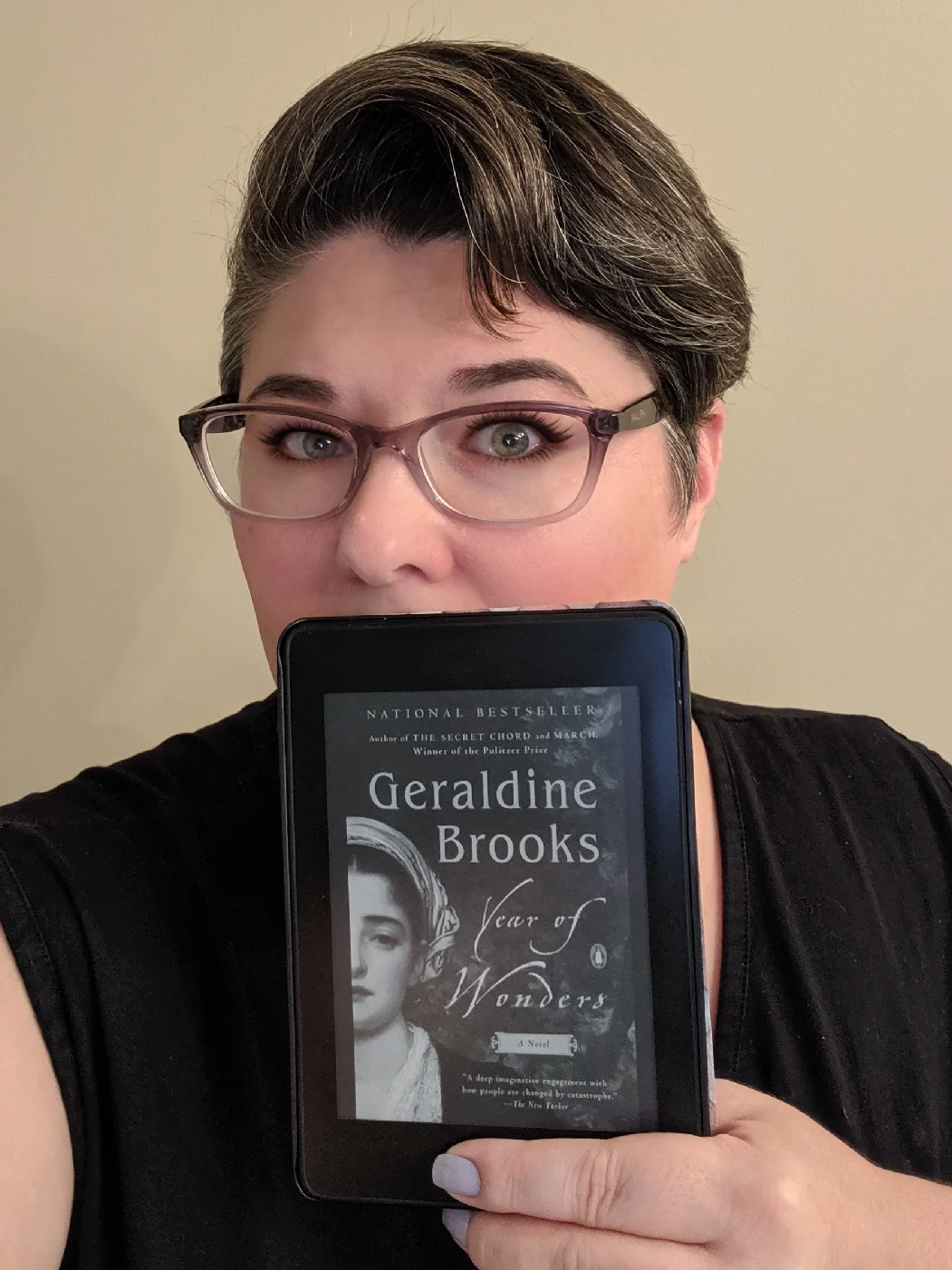
I barely remember State of Wonder, but Year of Wonders made a big impression on me. The setting in the plague was heartbreaking and eerie, and the character work that Geraldine Brooks does in this book is wonderful.

AirBrush_20190903185626.jpg

My son was born in 2012, so I read parts of a lot of the What to Expect type books and then barely had time to read at all!

The Murder of the Century surprised me. I had known a bit about “yellow journalism” before, but I learned a lot more about it while reading this. And the description of the early days of the expansion of New York City to cover the island of Manhattan was fascinating. I can barely imagine the natural landscape of Manhattan, but it’s very well described in this book by Paul Collins.

Interesting for its historical information.
—From my Goodreads review of The Murder of the Century, ⭐️⭐️⭐️

March tells the story of Louisa May Alcott’s Little Women from the perspective of the March family father serving in the Civil War. It won the Pulitzer, but I don’t think it’s as strong of a work as Year of Wonders. It was very good, but I don’t like the derivative world of retellings of classics.