
2011 Reading Log

  1. Alice’s Adventures in Wonderland by Lewis Carroll

  2. Heat Wave by Richard Castle

  3. Naked Heat by Richard Castle

  4. An Object of Beauty by Steve Martin

  5. American On Purpose: The Improbably Adventures of an Unlikely Patriot by Craig Ferguson

  6. People of the Book: A Novel by Geraldine Brooks

  7. Bel Canto by Ann Pratchett

  8. Caleb’s Crossing by Geraldine Brooks

  9. A Gate at the Stairs* by Lorrie Moore

  10. Heat Rises by Richard Castle

  11. The Autobiography of Mrs. Tom Thumb by Melanie Benjamin

  12. The Red Tent* by Anita Diamant

We’re beginning to enter the era of when algorithm suggestions started taking over the place of seeing things on sale or on the shelf in library. I have switched to reading on an e-reader as opposed to purchasing many physical books.

Lewis Carroll was on drugs. No one can convince me otherwise. As odd as the animated adaptation of Alice’s Adventures in Wonderland is, the book is weirder and darker.

I started reading the novelizations of the books mentioned in the Castle television series. I don’t usually read thrillers and detective stories, but I enjoyed these. They are seriously meta, which added an additional layer of enjoyment.

I know I’ve listed Steve Martin’s novel as having read it, but I have no memory of actually reading it, which is strange considering how vividly I remember reading his novella. I really think I listed it and then never got around to actually reading it.

Reading Craig Ferguson’s autobiography was a bit out of the ordinary for me. I enjoyed his humor as a late night show host, but I don’t often enjoy biographies and especially not celebrity biographies. I did like learning about his early life and how he overcame his addiction, though.

I absolutely adore Geraldine Brooks. Caleb’s Crossing in particular is a gorgeous work of historical fiction that really draws the reader into its settings and covers an important period in American history that isn’t covered in most curriculums.

AirBrush_20190903190514.jpg

I recently described Bel Canto as a perfect jewel of a novel. It is such an example of excellence in writing. I haven’t seen the movie adaptation, but I would like to look it up. I’ve heard it isn’t that great, but it would be hard to capture everything that is right about the novel.

I attempted to read A Gate at the Stairs twice and never made any progress. I couldn’t sympathize with the characters and didn’t get a good enough sense of the suspense to carry me through.

The Autobiography of Mrs. Tom Thumb was fascinating for its exploration of the subculture of celebrity and sideshows in American history. It had some issues, but was an overall excellent read.

I keep seeing The Red Tent in bookstores, and I don’t understand why so many people love it so much. I could never make it all the way through it.
2010 Reading Log

  1. The Lazarus Project by Aleksandar Hemon

  2. A Christmas Carol by Charles Dickens

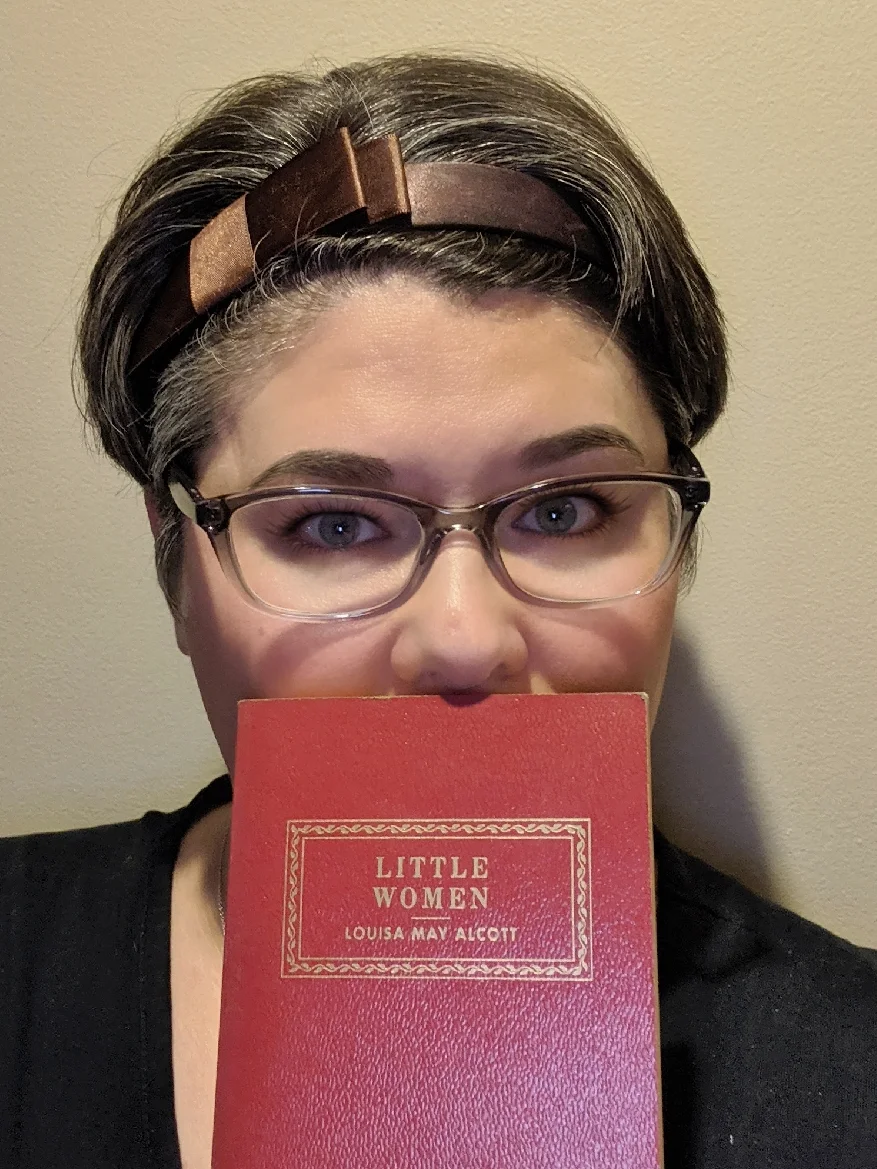
  3. Little Women by Louisa May Alcott

Alas, when moving in with your fiancé, planning a wedding, and buying your first house, there is very little time to read. I think I also got my first smart phone during this time, which I’m sure didn’t help.

I only vaguely remember reading The Lazarus Project, but I remember it being a finely interwoven tale that was quite suspenseful despite knowing how the story would end from the outset.

I enjoyed the complexity of the narrative, but I just couldn't get fully absorbed in a book that contained so many repellent characters and events. I prefer cleaner complexity that appeals to my better angels instead of revels in engaging the reptilian brain - just a personal preference of mine, nothing against Hemon or The Lazarus Project.

—From my Goodreads review of The Lazarus Project

AirBrush_20190904035734.jpg

I believe I read both A Christmas Carol and Little Women near Christmas time. I find the simplicity of classics to be soothing, sometimes. There was a war going on in Little Women but the characters seem somewhat insulated from the worst of its implications. And Dickens is always a delight.

I suppose it’s a little unfortunate that I didn’t read very much this year, but I can at least be proud that the books I did read were of such quality.

2009 Reading List

  1. Wuthering Heights by Emily Brontë

  2. Emotional Intelligence: Why It Can Matter More Than IQ by Daniel Goleman

  3. Addresses by Henry Drummond

  4. A Natural History of the Senses* by Diane Ackerman

  5. Battlefield of the Mind: Winning the Battle in your Mind* by Joyce Meyer

  6. Hatch Show Print: The History of a Great American Poster Shop* by Paul Kingsbury

  7. Twilight: Director's Notebook by Catherine Hardwicke

  8. Wetlands* by Charlotte Roche

  9. The Fortress of Solitude* by Jonathan Lethem

  10. The Chronicle’s of Narnia: The Magician’s Nephew by C.S. Lewis

  11. Austenland: A Novel by Shannon Hale

  12. Sheet Music by Kevin Leman

I hate Wuthering Heights. Heathcliffe and Cathy are both so deeply awful, and the love story is unhealthy, to put is mildly. I admire Emily Brontë a great deal and can appreciate the atmospheric description in the book, but I can’t bring myself to like the story even a little.

Emotional Intelligence: Why It Can Matter More Than IQ by Daniel Goleman is a must read. I have given people the advice that they will understand themselves much better after having read this seminal work. This book had a profound impact on my self identity and how I shape how I interact with the world.

This is one of the first books that really got me interested in cognitive science. It also gave me the evidence I needed to be able to let go of my ideal of placing paramount importance on intellect alone. I had placed such a premium on book learning and academic pursuits that I had begun to undervalue other types of intelligence and perhaps even look down on those who had less formal education.

- From a 2014 Facebook post about books that have influenced me

A Natural History of the Senses by Diane Ackerman was a book that dovetails nicely with the work on emotional intelligence, and I really think all writers should read it. It’s a landmark work, though it’s not quite as accessibly written as other non-fiction scientific works.

Battlefield of the Mind: Winning the Battle in your Mind* by Christian self-help author Joyce Meyer was something I probably picked up to get a better handle on how to do adulting, but the Christian authors in that sphere are all pretty condescending and pander to their bases at the expense of giving truly useful advice.

A “shelfie” circa 2009 when I was still single and lived on my own. The “favorites” shelf is so bare because most of the books that should be there are in a stack on my bedside table. Orson Scott Card is still cancelled.

A “shelfie” circa 2009 when I was still single and lived on my own. The “favorites” shelf is so bare because most of the books that should be there are in a stack on my bedside table. Orson Scott Card is still cancelled.

Twilight: Director's Notebook by Catherine Hardwicke who directed the first Twilight film may seem like such a fangirl purchase, but the book design is really excellent. It’s a visually stunning and fun read that I’ll never be ashamed of on my shelf.

Wetlands* by Charlotte Roche was another book that my girlfriend wanted me to read so she could get my reaction to it. It was crass. Apparently, it was written by a German equivalent of an MTV host, and she was definitely going for shock value, though I hear a lot of the work is autobiographical. It’s supposed to be a frank exploration of sexual awakening, but it’s just a tawdry retelling of an underage girl’s sexual exploits and it makes me cringe.

The Fortress of Solitude* by Jonathan Lethem was something I picked up because an ex-boyfriend was always reading these modern literary works, and I thought I should be reading them, too. So I went through a phase where I tried to catch up on all the latest Franzen and Lethem and whatnot. But here’s the thing, they often feature less-than-likeable characters, and I never can finish a book unless I think the character is a good person. In particular, I never felt like this story was going anywhere.

I set out to read through The Chronicle’s of Narnia and started with The Magician’s Nephew. I finished it, but I never went on to read the rest of the series. I just never felt like C.S Lewis’ writing was all that good.

Austenland: A Novel by Shannon Hale was a fun romp. I don’t often pick up derivative works like this, but when I do, I tend to enjoy them.

Sheet Music by Kevin Leman is a preachy “don’t have sex before you’re married” and “here’s how good Christians have sex AFTER they’re married” workbook for newly engaged couples, which I was at the time. It wasn’t required reading, but I was trying to fit into the mold that the modern evangelical church has labelled “good Christian”.